Composition, action, reaction – it's chemistry. And the world should be taught about it.

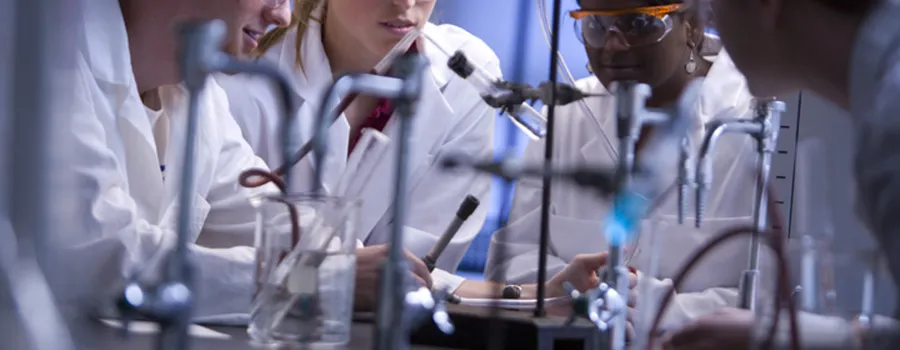
Learn basic scientific principles and valuable chemistry knowledge, plus the skills essential to becoming an impactful educator. Our Department of Chemistry is equipped with top-notch laboratories and classrooms that will benefit you throughout your time in the program. Within your senior year of your chemistry education degree, you will complete a research project with an area of special interest, which has the chance to be recognized at a professional research institution. In the past, our students’ projects have been selected for summer programs at research institutions such as Oak Ridge National Laboratory, Massachusetts Institute of Technology, Clemson University, Notre Dame, Brown University, and the Natural History Museum in London England. Additionally, as part of this education in chemistry program, you'll have the opportunity to join the Alchemist Club (an affiliate of the American Chemical Society) with field trips and special events.  

Anchor: Stats

By the Numbers

$61,820

Average Salary

5%

Industry Growth

1 in 5

Students Make Dean's List

80%

Faculty with Highest Degree
Anchor: FAQs

Common Questions in Chemistry Education

Anchor: Programs & Requirements
Programs & Requirements

Programs & Requirements

* The credit hours listed on this page only reference the specific program requirements and is not reflective of the total hours necessary to receive your degree. Cumberlands requires all students obtain a minimum of 60 hours for an associate’s degree and a total of 120 hours for a bachelor’s degree. Transfer and prior learning credits may be counted toward those totals.

To learn more about our General Education Requirements, please visit the page referenced below or explore our Academic Catalog

General Education Requirements

Bachelor of Science in Chemistry Education

The Chemistry Education program combines a rigorous foundation in the chemical sciences with professional teacher preparation, preparing students to become knowledgeable and effective secondary science educators. Students study core areas of chemistry, including organic chemistry, analytical chemistry, inorganic chemistry, physical chemistry, laboratory science, and scientific research while developing the instructional skills needed to teach chemistry in middle and high school classrooms. Through coursework in education, curriculum development, classroom management, assessment, and instructional technology, students learn how to make complex scientific concepts engaging, accessible, and relevant for diverse learners. Hands-on laboratory experiences, research opportunities, and student teaching placements help students develop both scientific expertise and classroom confidence while preparing for teacher certification and careers in STEM education. 

What You'll Learn

Students in the Chemistry Education program develop knowledge and skills in:

  • Organic chemistry and chemical reactions
  • Analytical chemistry and laboratory analysis
  • Inorganic chemistry and material science concepts
  • Physical chemistry and thermodynamics
  • Chemical synthesis and experimental design
  • Scientific inquiry and research methods
  • Laboratory safety and science instruction
  • Data collection, statistical analysis, and interpretation
  • Secondary chemistry curriculum development
  • Lesson planning and standards-based instruction
  • STEM education and inquiry-based learning
  • Classroom management and student engagement
  • Educational technology for science classrooms
  • Assessment and evaluation of student learning
  • Scientific communication and technical writing
  • Differentiated instruction for diverse learners
  • Critical thinking and problem-solving strategies
  • Professional ethics and responsibilities of educators
  • Student teaching and classroom leadership

Graduates learn how to teach chemistry through laboratory experiences, demonstrations, inquiry-based learning, and evidence-based instructional practices. They gain the scientific knowledge, pedagogical expertise, and classroom experience necessary to become licensed chemistry teachers while helping students develop scientific literacy, analytical reasoning, and a deeper understanding of the physical world. The program also provides valuable preparation for STEM education careers, graduate study, and leadership roles in science education.

Course Requirements

I am much more prepared for grad school and my future career because of this learning experience. Dr. Julie Tan has put a lot of effort into ensuring I get the best experience out of this process, and I deeply appreciate her for that. I’ve become more aware of the research life and now better understand how to apply my academic knowledge in a real-world setting for a greater purpose.

Korbin Keith
Class of 2025
Anchor: Mission & Goals

Mission & Goals

The purpose of the chemistry education program at University of the Cumberlands is to prepare you to move directly into either a graduate program or a teaching career – stepping onto either path as a highly qualified, knowledgeable, and caring person.

Provide high-quality instruction for diverse learners, in keeping with Kentucky Teacher Standards and University of the Cumberlands’ standards.
Understand chemical principles in the areas of analytical, inorganic, organic, and physical chemistry.
Critically reflect and assess your skills, creating opportunity for growth.
Appreciate ethical and Christian moral values in education.
Exemplify strong oral, written, and information literacy skills.
Anchor: Career Outcomes

Chemistry Careers & Outcomes

All stats from U.S. Bureau of Labor Statistics

Chemistry Teacher: $61,820

Chemistry Teacher: $61,820

Teaching students chemistry concepts at the secondary level.

Chemist: $79,760

Chemist: $79,760

Chemists research and analyze the chemical properties of different substances and materials and develop new materials and products. 

Chemical Technician: $48,990

Chemical Technician: $48,990

Conduct laboratory tests and help scientists with analyzing materials. 

Forensic Science Technician: $61,930

Forensic Science Technician: $61,930

Collect and analyze evidence from crime scenes to help criminal investigators with their investigation.

Environmental Science Specialist: $76,530

Environmental Science Specialist: $76,530

Work in protecting the environment and human health. 

Physician Assistant: $121,130

Physician Assistant: $121,130

Examine, diagnose, and treat patients under the supervision of a physician (will require additional education after bachelor’s degree).

Anchor: Faculty

Faculty Experts in Chemistry

Learn more about your future chemistry and education professors.

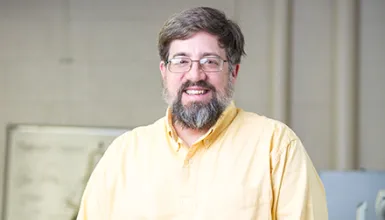
Jeffrey Schwarz

Jeffrey Schwarz

Associate Professor
Chemistry

Jeffrey Schwarz

Contact Information

jeffrey.schwarz [at] ucumberlands.edu
Correll Science Complex C106
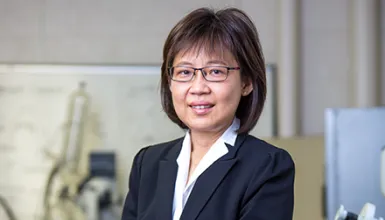
Dr. Julie Tan

Dr. Julie Tan

Professor, Department Chair
Chemistry

Dr. Julie Tan

Contact Information

julie.tan [at] ucumberlands.edu
Correll Science Complex C104
Dr. Amber Randolph

Dr. Amber Randolph

Dean - School of Arts and Sciences
Art
Biology
Chemistry
Health, Exercise and Sport Science
History
Mathematics
Missions & Ministries
Music
Physics
Political Science
World Languages

Dr. Amber Randolph

Contact Information

amber.randolph [at] ucumberlands.edu
Remote

Request Information

Let us know any questions you have, and we'll reach out to you soon with information.

Loading...