
Prepare for Your Future as a Physician Assistant
Take the first step toward a rewarding career as a physician assistant at University of the Cumberlands in Williamsburg. Our Master of Science in Physician Assistant Studies (MSPAS) program provides students with the academic foundation, clinical skills, and hands-on experience needed to become confident, compassionate healthcare professionals.
Through rigorous coursework, experienced faculty, and immersive clinical training, you’ll develop the knowledge and skills needed to provide high-quality, patient-centered care across a variety of healthcare settings and medical specialties.
Your path to becoming a PA starts here. Explore what University of the Cumberlands’ Master of Science in Physician Assistant Studies program in Williamsburg has to offer.
Stats
Curriculum & Degree Requirements
Our accredited Master of Science in Physician Assistant Studies (MSPAS) program prepares students with the knowledge and skills needed to provide high-quality patient care. The 27-month program consists of 113 credit hours completed across two distinct phases: the Didactic Phase and the Clinical Phase.
Courses
The Clinical Phase includes eight clinical rotation courses, along with research and professional development coursework designed to prepare graduates for entry into clinical practice.
* Clinical Rotation courses may occur in any order and will likely not occur in the semester layout above.
Clinical rotation experiences are designed to provide physician assistant program students with supervised experiences that will enable the student to:
• Assess, diagnose, and manage common acute and chronic problems.
• Provide preventative health and health maintenance.
• Integrate with other members of the health care team.
• Utilize evidence-based practices/principles as part of the Physician-PA student team.
• Record and communicate medical data in an organized, intelligent process.
• Identify role limitations and indications for referral and consultation.
• Develop skills and habits necessary for life-long learning.
• Provide compassionate, culturally competent healthcare to all patients.
Clinical Rotation Courses
* Clinical Rotation courses may occur in any order and will likely not occur in the semester layout above.
Competency | Sub-competency | Assessment Method | Benchmark | Outcomes |
Clinical and Technical Skills | Obtain accurate patient history and perform appropriate physical examination. | Summative OSCE – History taking Component | ≥ 75% | • 100% C23-26 |
|
| Summative OSCE – Physical Examination Component |
| • 100% C23-26 |
| Perform technical skill safely and effectively. | Technical Skills OSCE– Randomly assigned procedural/technical skill from SCPE syllabi | ≥ 3.0 on a 5-point Likert scale. | • TBD Spring 2027 (New assessment with data not yet available) |
| Apply evidence-based, patient-centered care. | Summative OSCE – Integrated clinical encounter performance | ≥ 75% | • 100% C23-26 |
|
|
|
|
|
Clinical Reasoning and Problem-Solving Abilities | Interpret clinical data to develop differential diagnoses. | Summative OSCE – Diagnostic Reasoning Component | ≥ 75% | • 100% C23-26 |
| Develop appropriate diagnostic and management plans. | Summative OSCE – Case workup and management planning | ≥ 75% | • 100% C23-26 |
| Apply clinical reasoning to support safe patient care. | Summative OSCE – Integrated patient management scenario | ≥ 75% | • 100% C23-26 |
|
|
|
|
|
Interpersonal and Communication Skills | Provide clinical information and patient education using clear and professional communication. | Summative OSCE – Patient education component | ≥ 75% | • 100% C23-26 |
| Communicate effectively with healthcare team members. | Summative OSCE – SBAR Communication Component | ≥ 75% | • 100% C23-26 |
|
|
|
|
|
Medical Knowledge | Apply biomedical and clinical science knowledge to patient care. | PAEA End of Curriculum Exam (EOCE) | ≥ one standard deviation below the national mean | • 100% C23-26 |
| Integrate medical knowledge across clinical disciplines. | PAEA End of Curriculum Exam (EOCE) | ≥ one standard deviation below the national mean | • 100% C23-26 |
| Use current medical evidence to support clinical decision-making. | PAEA End of Curriculum Exam (EOCE) | ≥ one standard deviation below the national mean | • 100% C23-26 |
|
|
|
|
|
Professionalism | Demonstrate ethical and professional behavior in academic and clinical settings. | Summative Professionalism Assessment Tool (SPAT) | Overall ≥ 3.0 with no domain < 3.0 | • 100% C23-26 |
| Exhibit accountability and responsibility in patient care and professional activities. | Summative Professionalism Assessment Tool (SPAT) | Overall ≥ 3.0 with no domain < 3.0 | • 100% C23-26 |
| Maintain professional behaviors that support safe, respectful, and high-quality care. | Summative Professionalism Assessment Tool (SPAT) | Overall ≥ 3.0 with no domain < 3.0 | • 100% C23-26 |
PA Information Sessions
Register for one of our upcoming information sessions, meet our faculty members and learn more about our PA program.

Take the Next Step
Admission Information
Application and Interview Process
Admission to the Williamsburg Campus MSPAS Program at University of the Cumberlands is competitive. The Physician Assistant Program reviews each applicant who has completed and submitted each component of the admission material and meets the academic requirements. All applicants that meet admissions requirements are awarded points using an applicant score sheet. Consideration is given based on BCP GPA (Biology, Chemistry, Physics), documented clinical experience, letters of recommendation, and applicant residence. Applicants who reside in Appalachia, or a medically underserved area, and those who have completed hours at UC receive additional points on the score sheet.
The application cycle opens in April and closes August 1st each year.
After the applicant score sheets are completed for those that meet all requirements, the score sheets and application materials are utilized to determine invitations to online interviews. Any student who has completed the Pre-professional Physician Assistant curriculum or has obtained a Bachelor's degree from University of the Cumberlands and met all admission requirements will be given an interview regardless of their application ranking. Applicants invited to an interview, including those who have completed the Pre-professional Physician Assistant curriculum and UC graduates, are not guaranteed admission to the graduate program. All admission and interview materials will be used to select a cohort of 30 qualified candidates.
Because admission information is updated regularly, applicants should verify current requirements linked on the program website. Please review admission requirements prior to submitting an application.
UC MSPAS program application cycle opens in April each year. The deadline for the cycle is August 1st. All admissions material must be verified by this deadline.
Interviews are conducted by Physician Assistant Program faculty and instructors, along with relevant UC administrators. Both individual and group interviews are utilized. Notification of interview is sent to the email submitted on the CASPA WebADMIT system by the applicant. The Physician Assistant Program will send an interview notification at least one week prior to the dates set.
* International students seeking to study in the Physician Assistant program under an F1 student visa can only apply to study at our Williamsburg, KY campus.
Technical Standards
Individuals applying to the University of the Cumberlands Physician Assistant Program at the Williamsburg campus or Northern Kentucky campus must meet certain basic/essential requirements (referred to as the Technical Standards) that are necessary for obtaining employment and performing as a Physician Assistant. The Technical Standards each student must master include cognitive, physical and behavioral characteristics. Reasonable accommodation for persons with documented disabilities will be considered on an individual basis; but, a candidate must be able to perform in an independent manner. All students must possess the intellectual, ethical, physical, and emotional capabilities required to undertake the full curriculum and to achieve the levels of competence required by the program's core faculty. The following skills are required of each Physician Assistant student, with or without accommodation:
- Sufficient capacity for observation in academic, clinical, and other medical settings; functional vision, hearing, and tactile sensation sufficient to observe a patient’s condition and perform procedures regularly required during a physical examination
- Effective written and verbal communication skills sufficient to both academic and healthcare settings
- Sufficient motor function to carry out movements necessary for patient diagnosis and care; for free movement inpatient care and between facilities and buildings in academic and healthcare environments; physical stamina to complete didactic and clinical coursework
- Sufficient intellectual ability to measure, calculate, reason, analyze, and synthesize, in the context of medical problem-solving and patient care
- Sufficient emotional health and stability are required for exercising good judgment and promptly completing all academic and patient care responsibilities
Please see full technical standards in the MSPAS Catalog & Policy Handbook (Williamsburg Campus).
Admission Requirements
NOW OFFERING ROLLING ADMISSIONS
The CASPA Application Cycle for our Williamsburg program opens the last Thursday of April each year, and closes on August 1.
Curriculum for the physician assistant program at our Williamsburg Campus is open to applicants who have earned, or will earn, by the end of the fall semester prior to spring semester entry, a baccalaureate degree and have met, or will have met, by the end of the fall semester prior to spring semester entry, the following prerequisites.
In addition, the committee has determined that just as a UC 3-2+ student who meets minimum requirements will be guaranteed an interview in that application cycle, any UC student enrolled in a military program with the intention to become a military PA and meets requirements will also be guaranteed an interview in the year in which they apply.
***The following admissions requirements must be completed by the application deadline of August 1 unless otherwise noted.
Official Transcript Information: In accordance with University of the Cumberlands admissions policies and procedures, those students selected for admission to the MSPAS program at either the Williamsburg campus or the Northern Kentucky campus are required to submit official transcripts from all colleges/universities previously attended. These transcripts must be received directly from the college/university. Student-submitted copies are not acceptable. Transcripts should be mailed directly to:
Graduate Admissions Office
649 S. 10th Street Suite C
Williamsburg, KY 40769
Phone: 606.539.4390
Toll-free: 800.343.1609 ext. 4390
Email: gradadm [at] ucumberlands.edu (gradadm[at]ucumberlands[dot]edu)
Transcripts must be received prior to the scheduled class matriculation date or class standing will be revoked. Failure to submit the mandatory transcripts or fulfill any other requirements specified in a conditional offer of admission to the program, prior to the scheduled class matriculation will result in withdrawal of the conditional offer.
Transfer and Course Credit Policy: No transfer credit will normally be accepted for courses in the MSPAS program at either the Williamsburg campus or the Northern Kentucky campus.
The University of the Cumberlands Physician Assistant Program does not grant advanced placement to students or applicants.
- Completed CASPA application
- Completed PA Supplemental Application – Once an applicant’s CASPA Application has been verified and reviewed, a link to the Supplemental Application will be provided via email
- An earned bachelor’s degree with an overall cumulative grade-point average (GPA) of 3.0 on a scale of 4.0
- A minimum average of 3.0 on a scale of 4.0 in required pre-requisite courses. Pre-recs must have a grade of C or better.
- A minimum of 3.0 GPA on a 4.0 scale in the combined Biology, Chemistry, Physics (BCP) as figured by Central Application Service for Physician Assistants (CASPA).
- Ability to fulfill any university admission requirements
- Successful completion (as defined above) within ten years prior to admission of the following undergraduate science courses:
- Anatomy with lab (Human preferred)- 3 semester hours or more
- Physiology with lab (Human preferred)- 3 semester hours or more
- Microbiology with Lab- 3 semester hours or more
- Medical Terminology
- Upper Level Science Electives - 6 semester hours (Select from Genetics, Embryology, Immunology, Biochemistry, Advanced Cell Biology, Molecular Biology, Histology, Parasitology, Virology, Organic Chemistry II, Analytical Chemistry, any upper level Pharmacology course)
- General Chemistry 1 and 2 with labs- 3 semester hours or more
- Organic 1 or Biochemistry - 3 semester hours
- Psychology (Abnormal or developmental preferred)- 3 semester hours or more
- Statistics- 3 semester hours or more
Direct Patient Contact Hours: The purpose of patient contact experience is to provide prospective students an introduction to medicine allowing the aspiring applicant exposure to medical terminology, common normal and abnormal findings, as well as introduction to critical thinking. It also allows for exposure to team-based care where they will encounter a variety of health care providers and how they work together for patient care. Lastly this provides the aspiring PA students ability to build professionalism skills such as communication, rapport, and accountability. The purpose of PA shadowing experience is to provide prospective students an understanding of the physician assistant profession as a unique member of the health care team. This allows the prospective student to have an understanding of the profession prior to enrollment. To achieve this, any patient care experience and PA shadowing that meets criteria will have to have occurred in specific locations as outlined below:
Patient Care Experience is paid or unpaid direct patient care and/or observation of medical care occurring in a defined healthcare setting: outpatient clinic, inpatient (hospital, nursing home, long term facility), acute care (urgent treatment facility, emergency room, and prehospital acute care), perioperative care (pre-op, operating room, and post op care in both inpatient and outpatient surgery).
PA shadowing experience is direct observation of a physician assistant in the delivery of health care with patients and other members of the healthcare team.- Submission of 3 letters of recommendation (Acceptable references: MD, DO, PA, or NP as well as academic advisors)
- Successful completion of an interview with and positive recommendation from program faculty
*We do not offer advanced placement/accept transfer credit for prior PA coursework.
- If admitted: Student will be required to complete a satisfactory level 1 background check, urine drug screen, and physical exam with documentation of the following immunizations as recommended for health care personnel by the Centers for Disease Control and Prevention (CDC).
- Proof of TB Test (positive results will require the students to receive a chest x-ray and further evaluation)
- Proof of Hepatitis B vaccine and positive Hep B Ab (titer)
- Proof of MMR vaccine or immunity
- Proof of Varicella history or vaccination
- Proof of Tetanus/Diphtheria/Pertussis vaccine
- Proof of Covid-19 vaccination
- Annual influenza vaccine while on clinical year
- Proof of Polio vaccination
- Proof of Meningococcal vaccine**
- Pneumococcal polysaccharide PPV vaccine**
**These vaccinations are not required by the program based on current CDC guidelines. If a clinical site requires these vaccinations, students must comply with facility guidelines to enable clinical placement and ensure completion of all curricular requirements.
- Demonstration to program principal faculty of ability to meet the following technical standards:
- Sufficient capacity for observation in academic, clinical, and other medical settings; functional vision, hearing, and tactile sensation sufficient to observe a patient’s condition and perform procedures regularly required during a physical examination
- Effective written and verbal communication skills sufficient to both academic and healthcare settings
- Sufficient motor function to carry out movements necessary for patient diagnosis and care; for free movement inpatient care and between facilities and buildings in academic and healthcare environments; physical stamina to complete didactic and clinical coursework
- Sufficient intellectual ability to measure, calculate, reason, analyze, and synthesize, in the context of medical problem-solving and patient care
- Sufficient emotional health and stability required for exercising good judgment and promptly completing all academic and patient care responsibilities
** Waivers will be considered by the admissions committee on a case-by-case basis. If requesting a waiver for one of the admissions criteria, please contact the MSPAS program. Under no circumstances will the minimum requirements for entrance to the program be waived.
Undergraduate students interested in applying for early admission into the university’s Master of Science in Physician Assistant Studies (MSPAS) program must have declared as a freshman and complete all course work as 3-2+ at UC. We do not accept transfer students into the 3-2+ pathway. View our Pre-Physician Assistant academics page for more information on that major.
Additionally, students must complete all requirements of the General Education curriculum for undergraduates as outlined in the University of the Cumberlands undergraduate academic catalog. (You can find the catalog on our website.) Admission is made during the third year of undergraduate study. Must complete all admission criteria by the time of matriculation. We allow applicants to have courses in progress at time of application. Completion of the Pre-PA curriculum does not ensure acceptance into the MSPAS program.
Students who complete the Pre-Professional PA curriculum but do not continue on to the professional phase of the PA program will need nine hours of biology, five hours of chemistry and sixteen hours of electives to complete a major in biology. Alternatively, they can complete a Biology of Science degree in Independent Directions with a focus on applied health sciences. A third alternative is to complete a Bachelor of General Studies degree. Information on these alternatives may be found elsewhere in the University of the Cumberlands’ Undergraduate catalog.
Students who successfully complete the pre-physician assistant curriculum and are accepted into the MSPAS program are awarded a Bachelor of Health Science degree by the University after the successful completion of the first year of didactic coursework in the MSPAS program. Students are then awarded the Master of Science in Physician Assistant Studies degree after the successful completion of the second year of coursework.
In addition to the admissions requirements noted above for general applicants, the following courses are required prior to application for Pre-professional students:
- BIOL 113 - Intro. to Population Biology Lab.
- BIOL 114 - Intro. to Cellular Biology Lab.
- BIOL 121 - Medical Terminology
- BIOL 133 - Intro. to Population Biology
- BIOL 134 - Intro. to Cellular Biology
- BIOL 244* - Human Physiology OR BIOL 443 - General Animal Physiology
- BIOL 246 - Biodiversity
- BIOL 340 - Genetics
- BIOL 343 - Human Anatomy
- BIOL 345 - Microbiology
- CHEM 111 - General Chemistry Lab. I
- CHEM 132 - Chemistry 1 w/ lab- 3 semester hours or more
- CHEM 211 - General College Chemistry Lab. II
- CHEM 232 - Chemistry 2 w/ lab - 3 semester hours or more
- CHEM 321 - Organic Chemistry Lab. I
- CHEM 322 - Organic Chemistry I
- Upper Level Science Electives - 6 credit hours (Select from Genetics, Embryology, Immunology, Biochemistry, Advanced Cell Biology, Molecular Biology, Histology, Parasitology, Virology, Organic Chemistry II, Analytical Chemistry, any upper level Pharmacology course)
- Psychology (3 credit hours)
- Statistics
*preferred
University of the Cumberlands Pre-Physician Assistant students are not guaranteed admission to the PA program; however, pre-professional UC students that meet all requirements for admission will automatically be granted an interview. Each PA applicant that meets all admissions requirements is graded using an admissions rubric that awards points based on academic performance, geographic location of the applicant, clinical work experience, and letters of recommendation.
In addition, the committee has determined that just as a UC 3-2+ student who meets minimum requirements will be guaranteed an interview in that application cycle, any UC student enrolled in a military program with the intention to become a military PA and meets requirements will also be guaranteed an interview in the year in which they apply.
Direct Patient Contact Hours: The purpose of patient contact experience is to provide prospective students an introduction to medicine allowing the aspiring applicant exposure to medical terminology, common normal and abnormal findings, as well as introduction to critical thinking. It also allows for exposure to team-based care where they will encounter a variety of health care providers and how they work together for patient care. Lastly this provides the aspiring PA students ability to build professionalism skills such as communication, rapport, and accountability. The purpose of PA shadowing experience is to provide prospective students an understanding of the physician assistant profession as a unique member of the health care team. This allows the prospective student to have an understanding of the profession prior to enrollment. To achieve this, any patient care experience and PA shadowing that meets criteria will have to have occurred in specific locations as outlined below:
Patient Care Experience is paid or unpaid direct patient care and/or observation of medical care occurring in a defined healthcare setting: outpatient clinic, inpatient (hospital, nursing home, long term facility), acute care (urgent treatment facility, emergency room, and prehospital acute care), perioperative care (pre-op, operating room, and post op care in both inpatient and outpatient surgery).
PA shadowing experience is direct observation of a physician assistant in the delivery of health care with patients and other members of the healthcare team.
*Students will need a minimum of 500 hours of paid employment or volunteer hours; must include a minimum of 50 hours PA shadowing.
Documentation of language fluency for non-native speakers of English, such as a score report from the Test of English as a Foreign Language (TOEFL), the 8 International English Language Testing System (IELTS), or a report from Duolingo. This requirement is waived for students who have completed bachelor’s or master’s level coursework in the U.S. at an accredited institution. The minimum acceptable TOEFL or IELTS scores for admission are:
- Paper-based TOEFL (PBT) - 550
- Internet-based TOEFL (IBT) - 79
- IELTS - 6
- Duolingo - 100
Any international coursework completed must have official transcript evaluations completed and submitted to the University by the evaluation firm. Evaluations MUST include GPA for admission.
Approved Evaluation Firms are:
Tuition
At University of the Cumberlands, we strive to make education accessible and affordable.
Program Metrics
| Class | Class Graduation Year | Number of First Time Takers | Program First Time Taker Pass Rate | National First Time Taker Pass Rate for the Class Graduation Year |
| Cohort 6 | 2022 | 26 | 88% | 92% |
| Cohort 7 | 2023 | 26 | 100% | 92% |
| Cohort 8 | 2024 | 27 | 93% | 92% |
| Cohort 9 | 2025 | 21 | 87% | 91% |
| Cohort 10 | 2026 | 27 | 96% | 94% |
Five-year first-time taker average pass rate for the program: 93%
Five-year national first-time taker average: 92%
| Graduated Classes | Class of 2023 | Class of 2024 | Class of 2025 | Class of 2026 |
| Maximum entering class size (as approved by ARC-PA) | 31 | 30 | 30 | 31 |
| *Entering class size | 31 | 30 | 30 | 31 |
| Graduates | 26 | 27 | 23 | 26 |
| ** Attrition rate | 16% | 10% | 23% | 13% |
| ***Graduation rate | 84% | 90% | 77% | 87% |
*This includes the number of joining class cohort who began with different cohort.
**Attrition rate calculation: Number of students who attritted from the cohort divided by the entering class size.
***Graduation rate: Number of cohort graduates divided by the entering class size.
PA Student Resources
The Williamsburg campus PA program is housed in the 1st & 2nd floors of the Correll Science Complex.
Course Catalogs
Classrooms
Classrooms
The physician assistant program has two lecture classrooms, all specifically dedicated to the department's use inside the Correll Science Center. Classrooms have a seating capacity of 30 students.
Laboratories
Laboratories
The physician assistant program has two laboratories built specifically for the department.
- The Procedures/Skills Laboratory is used for patient procedure simulations.
- The Physical Assessment Laboratory houses our Anatomage "cyber-dissection" table used during the laboratory portion of our anatomy course and other components of the curriculum.
Student Lounge
Student Lounge
A lounge for the physician assistant program students is located in the upstairs corridor of the Correll Science Building. Furnished in the lounge are lockers, cabinets, a refrigerator, a microwave, and a sink.
Common Questions
A Master’s in Physician Assistant Studies (MSPAS) at the University of the Cumberlands' Williamsburg Kentucky campus is an advanced program that prepares students to become skilled healthcare providers. The curriculum is designed to ensure students gain the comprehensive medical knowledge and practical experience necessary to deliver primary care, working in tandem with licensed physicians. Through rigorous coursework and clinical rotations, students are equipped with the essential skills and credentials.
The MSPAS program at the University of the Cumberlands spans approximately 27 months. This duration encompasses both on-campus didactic instruction and hands-on clinical rotations, ensuring students receive a well-rounded education that combines theoretical learning with practical application.
No, the MSPAS program at the University of the Cumberlands is exclusively available on-campus at their Northern Kentucky and Williamsburg locations. The program's structure includes vital hands-on clinical training and laboratory work that cannot be effectively replicated in an online format.
Absolutely, pursuing an MSPAS from the University of the Cumberlands is a sound investment. The field of physician assistants is experiencing significant growth, with high demand for qualified professionals, excellent job prospects, and competitive salaries. With an average salary of $121,530 and an industry growth rate of 31%, a career as a physician assistant is both financially and professionally rewarding.
Graduates with an MSPAS from the University of the Cumberlands can pursue careers as physician assistants in various medical fields, including primary care, family medicine, emergency medicine, psychiatry, and surgery. PAs are trained to examine, diagnose, and treat patients, perform diagnostic tests, prescribe medications, and provide patient education about health conditions and treatments.
To enroll in the MSPAS program at the University of the Cumberlands, you must first complete a bachelor’s degree and meet specific prerequisite coursework and entrance exam requirements. Once admitted, you will undergo 113 credit hours of both classroom-based and clinical education. After completing the program, you must pass the Physician Assistant National Certifying Exam (PANCE) to become a certified physician assistant.
Library Resources
Available to PA students through the electronic resources supported by the Grover M. Hermann Library are many electronic and online databases to which the library subscribes. The databases have become a major segment of the learning resources available on campus and provide scholarly support for all academic programs, including those in the medical field. Most of these databases include full-text journals and other information resources.
Of the available electronic resources, those that are considered particularly useful to the Master of Science in Physician Assistant Studies program consist of the following:
- Encyclopedia of Environmental Microbiology
- Encyclopedia of Molecular Biology
- CINAHL
- CINAHL with Full Text
- Health Source-Consumer Edition
- Lexis-Nexis Academic Universe
- MEDLINE
- Oxford Reference Online
- Wilson Web OmniFile Full Text Mega
- Psychology and Behavioral Sciences Collection
The collaborative agreements of KYVL members facilitate access of students of University of Cumberlands to other libraries and expedite no-fee interlibrary loans from member institutions.
The library catalog, with all electronic resources, may be accessed on-campus or off-campus through the library's website. Also available on the library’s homepage are links to online forms for interlibrary loan requests and to tutorials on accessing and using library resources.
Chelsea Brooks, PA-CI really loved my time in the PA program in Williamsburg. The small class size allowed for the faculty to really invest in us, and they went above and beyond to help us succeed. In such a rigorous program, it helped to have an environment that felt like a home away from home!
MSPAS '19
PA Program Goals
- Outcome:
1A: The UCPA Program has met its goal of recruiting students from a MUA area of origin and requires no actions at this time.
1B: The UCPA Program has met its goal of recruiting students from an Appalachian area of origin and requires no actions at this time.
- Outcome:
2A: UCPA students have had benchmark level and improved didactic content and task performance over the last 5 years of data. The majority of students of the last three cohorts have scored above benchmark on assessments evaluating medical knowledge. At least two-thirds of each cohort or higher have scored at or above benchmark on all organ system content areas and task areas on all assessments (PR I, PR II, EOCE, PANCE) except for: Urology/Renal and Infectious Disease systems and the task area diagnostic studies on EOCE, and the content areas EENT, MSK, Pulmonary, and Reproductive and task area health maintenance on PANCE isolated to the cohort 2025 students and marked improvement with return to benchmark performance on all other assessed subsequent cohorts. Admission metrics (prerequisite GPA, BCP GPA, and applicant pre-interview scores) are predictive of didactic performance and attrition, and didactic metrics (overall examsoft performance, didactic course performance {MPAS 510, 520, 540, 541, 542, 571, 572, 573}, PACKRAT I and EODE) correlate with clinical phase and curricular metrics suggesting the program’s strength in identifying at-risk students. The program noted an elevated # of student remediations and # of C or below grades, as well as attrition within the second and fifth semester of the program and determined an area of improvement to involve movement of non-clinical courses to semesters where students did not show the same trend of academic difficulty. MPAS 591 Research, Epidemiology and Stats, will be moved from the 2nd semester to the 4th semester beginning with Cohort 2029 in the spring of 2028, and MPAS 692 Capstone I from the 5th semester to the 6th semester for Cohort 2028 in the fall of 2027. The program also noted less than benchmark performance on the isolated surgical rotation course end of rotation exam.
2B: All students in cohorts 2023, 2024, and 2025, 2026 have been given scores above the minimum benchmark for Applying Basic Science Concepts, Health Maintenance, Patient Education, and Preventative Measures by their preceptors on the PES and Didactic Preparedness Survey of preceptors.
2C: Students positively appraised their acquisition of medical knowledge in the didactic year and on the clinical year on the students’ Didactic Preparation Survey, and Curricular Preparation Survey of students.
Outcome:
3A: Student task performance in History taking, performing physical exam, Lab & diagnostics, forming diagnosis, clinical intervention, and clinical therapeutics have been above benchmark for the last three cohorts on PACKRAT I & II, End of curriculum exam, and PANCE exams. Faculty and students have both rated students of these cohorts above the benchmark in clinical and technical skills showing achievement of meeting this goal.
3B: Overall average for End of didactic OSCE, & the summative clinical OSCE is above the minimum benchmark of 75% for students of cohorts 2025 (d & c), 2026(d & c), and 2027(d). Faculty have rated the students’ ability to perform clinical procedures above benchmark on the Didactic Preparation Survey over both of these years.
3C: All students of Cohorts 2023, 2024, and 2025, 2026 have positively appraised their competency acquisition of clinical and technical skills necessary to provide competent medical care on the NCCPA Self-Evaluation of Competencies exit survey, and Curricular Preparation Survey. Outcome data for Cohort 2027 will be available October 2027.
- Outcome:
4A: All cohorts 2022-2025 have cohort averages above program benchmark of one standard deviation below the national average on the professional practice task area on the PANCE. Outcome data for Cohort 2026 will be available October 2027.
4B: Faculty have rated the Cohort 2025, 2026, and 2027 students’ professionalism above benchmark on the Didactic Preparation Survey and Summative Professionalism Assessment Tool over both of these years.
4C: All students of Cohorts 2023, 2024, and 2025, 2026 have positively appraised their competency acquisition of professionalism necessary to provide competent medical care on the NCCPA Self-Evaluation of Competencies exit survey, and Curricular Preparation Survey. Outcome data for Cohort 2027 will be available October 2027.
Outcome:
5A: All cohorts 2022-2025 have cohort averages above program benchmark of one standard deviation below the national average on the professional practice task area on the PANCE. Outcome data for Cohort 2026 will be available October 2027.
5B: Cohorts 2024-2027 have demonstrated working collaboratively in interprofessional patient-centered teams through IPE Assignment in the didactic year. Clinical Cohorts log IPE exposure on EXXAT during the Clinical year. Clinical Cohorts have Professional Practice PES scores above the minimum benchmark, and Interpersonal and Communication Skills rating above benchmark on Didactic Preparedness Survey of Preceptors supporting adequate IPE exposure in all cohorts. Outcome data for didactic Cohort 2028 and clinical Cohort 2027 will be available October 2027.5C: All students over the last three-years have positively appraised their ability to work collaboratively in interprofessional patient-centered teams on the NCCPA Self-Evaluation of Competencies exit survey and Curricular Preparation Survey. Outcome data for Cohort 2027 will be available October 2027.
- Outcome:
6A: All cohorts 2022-2025 have cohort averages above program benchmark of one standard deviation below the national average on the professional practice task area on the PANCE. Outcome data for Cohort 2026 will be available October 2027.
6B: Students of Cohort 2023, 2024, and 2025 have demonstrated knowledge and skills to provide medical care regarding issues that affect diverse populations with the achievement of scores above the minimum benchmark in the Professional Practice and Caring for Diverse Populations sections of the Preceptor Evaluation of the Student (PES) and “relating to patients,” understanding role of PA,” and “professionalism” on the Didactic Preparedness Survey of Preceptors. Outcome data for Cohort 2027 will be available October 2027.
6C: All students over the last three-years have positively appraised their ability to provide medical care regarding issues that affect diverse populations on the NCCPA Self-Evaluation of Competencies exit survey and Curricular Preparation Survey. Outcome data for Cohort 2027 will be available October 2027.
Physician Assistant Faculty Experts
Learn more about the professors you will interact with in our physician assistant program.
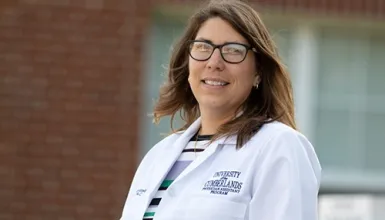
Dr. Dana Campbell
Dr. Dana Campbell
Contact Information
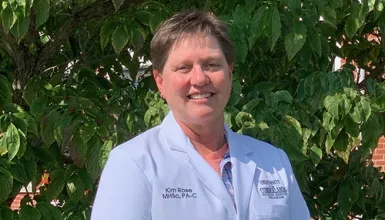
Dr. Kim Rose
Dr. Kim Rose
Contact Information

Dr. Geogy Thomas
Dr. Geogy Thomas
Contact Information
Accreditation
In addition to our overall institutional accreditation through SACSCOC, the PA program in Williamsburg, KY, has received accreditation from specialized accrediting bodies. The Accreditation Review Commission on Education for the Physician Assistant, Inc. (ARC-PA) has granted Accreditation-Continued status to the University of the Cumberlands Physician Assistant Program sponsored by the University of the Cumberlands. Accreditation-Continued is an accreditation status granted when a currently accredited program is in compliance with the ARC-PA Standards.
Accreditation remains in effect until the program closes or withdraws from the accreditation process or until accreditation is withdrawn for failure to comply with the Standards. The approximate date for the next validation review of the program by the ARC-PA will be March 2029. The review date is contingent upon continued compliance with the Accreditation Standards and ARC-PA policy.
The program’s accreditation history can be viewed on the ARC-PA website.
Want to Learn More About our Program?
Let us know you're interested, and we'll connect with you to answer all the questions you have.

Become a UC Physician Assistant Preceptor!
The University of the Cumberlands Physician Assistant Program is always interested in recruiting skilled and experienced MDs, DOs, PAs, and NPs to educate our students during the clinical phase of the program's curriculum. Our students complete supervised clinical experiences (also known commonly as “clinical rotations”) in family medicine, internal medicine, emergency medicine, women's health, pediatrics, behavioral and mental health, general surgery, and a clinical elective of the student's choice.
Do you remember the provider that inspired you? Become a UC PA Preceptor and impact healthcare one student at a time.
- Invest in the next generation of PAs
- Become eligible as a regular preceptor to receive a precepting stipend
- Evaluate possible future employees
- Add an educational component to your CV
- Serve in a guest lecturing role in the classroom
- Earn CME credits
- Add energy and enthusiasm to your practice through student participants
- “See one. Do one. Teach one.” Introduce students to new skills and procedures
- Offer training to master’s-level PA students for a clinical rotation
- Provide feedback on student performance
- Share opportunities and knowledge gained during practice
- Be an example of professionalism
- Grow a student’s communication skills
- Connect students with professionals in other areas
- Set the student’s schedule based on the provider’s schedule
If you would like more information about our preceptor opportunities, please contact the UC PA clinical team.
Dr. Tye Prewitt, DMSc, MSPAS, PA-C
Director of Clinical Education | Assistant Professor
tye.prewitt [at] ucumberlands.edu (tye[dot]prewitt[at]ucumberlands[dot]edu)
Mrs. Whitney Losey
Clinical Coordinator
whitney.losey [at] ucumberlands.edu (whitney[dot]losey[at]ucumberlands[dot]edu)
If you are interested in becoming a preceptor with University of the Cumberlands, please complete this form: