

Share


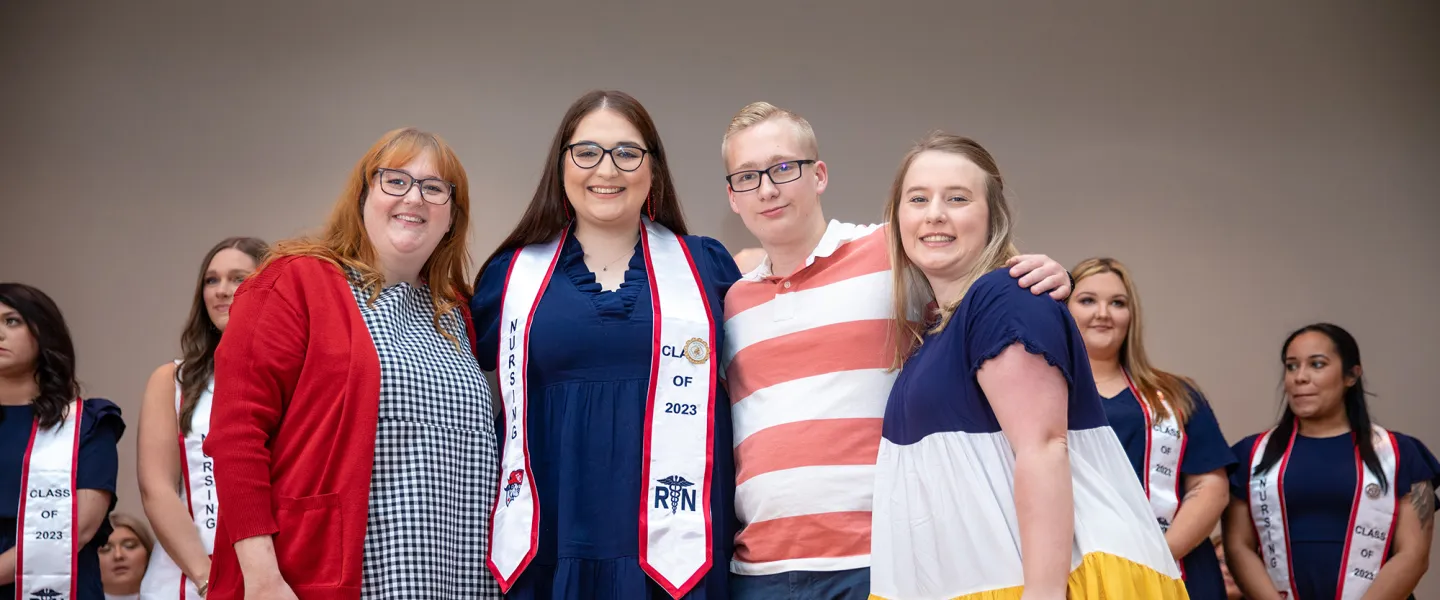
Cumberlands alumna Britnee Faulkner found an affordable path to a nursing career without leaving the Appalachian region she calls home.
On a national level, University of the Cumberlands has consistently been recognized for its affordability, quality, and commitment to student success. However, one aspect of Cumberlands that often takes a back seat on the national stage is its role in the Appalachian community it calls home.
Well, until recently, that is.
In its 2026 Best Colleges for Rural America ranking, Washington Monthly ranked University of the Cumberlands No. 4 in the nation.
Unlike college rankings focused primarily on factors such as selectivity, reputation, or institutional resources, Washington Monthly's ranking examines how colleges serve rural students and communities. Its measures include student affordability and debt, whether graduates remain in their home states, and whether colleges prepare graduates for careers that are in demand but in short supply in rural areas.
According to the publication, colleges like Cumberlands matter because they “give talented youth a way to stay local and make a decent living, and they show incoming industry that local talent is on offer.”
There are plenty of statistics behind that ranking. Sometimes, though, the clearest way to understand what those numbers mean is to look at the students who live them.
Britnee Faulkner '23 is one of them.
An Affordable Path to College Close to Home
Faulkner grew up “right down the road” from Cumberlands in Corbin, Kentucky. While students who lived farther away might have had to do some research to find the university, Cumberlands was essentially a household name for Faulkner and her peers.
“I always knew it was a good school that had great people and staff,” she shared.
Having Cumberlands in her backyard gave Faulkner an advantage because college became something she considered early on. As the time to determine her next steps drew closer, she began considering which factors mattered most in her college search.
“I still lived with my parents, so cost and location were the biggest things I considered.”
Though academics still mattered to Faulkner, she first and foremost needed a practical option that would not leave her with an unmanageable amount of student debt. Luckily, she found both quality and affordability at Cumberlands.
“Going to college close to home definitely affected the cost,” she said. “I didn't have to pay for food or room and board because I was able to live at home. I would have been a lot more in debt if I had chosen another university.”
For Faulkner, staying close to home didn't mean compromising on what she wanted from college. Instead, it allowed her to pursue the nursing education she wanted while reducing some of the expenses that can come with moving away.
And once she entered the nursing program, she found that the benefits of a Cumberlands’ education extend far beyond proximity.
Finding Support When She Needed It Most
“I felt at home in Cumberlands' nursing program,” Faulkner said. “Like all nursing schools, it was hard, but the staff was always there for us.”
For Faulkner, that support was not abstract.
During her time in the program, she experienced a significant personal loss when her sister passed away in the midst of her studies. Suddenly, Faulkner was navigating the demands of nursing school alongside grief.
Her instructors and staff covered her in prayer while also working to make sure she stayed on track academically.
“They made it so much easier to balance school alongside grief,” she said. “I don't think any other institution could have been so understanding.”
Successfully navigating the rigor of nursing school during such an emotionally heavy time took a great deal of personal resilience. But, as Faulkner explains, it also took a team of people committed to her well-being and success.
That consistent support resulted in Faulkner not only graduating, but passing her boards and gaining employment at Saint Joseph London.
Today, she works in the intensive care unit as a registered nurse, serving patients just a short drive from the community where she grew up and the university where she earned her degree.
From Local Student to Local Nurse
For Faulkner, becoming a nurse wasn't simply about finding a job after graduation.
“I am so glad that I went into nursing,” she said. “It's not just a career for me; it's my life. There are so many opportunities you can pursue with a nursing degree, and I have barely touched the tip of the iceberg.”
Her decision to build that career locally also matters to the community around her.
Rural communities across the country continue to face challenges in recruiting and retaining healthcare professionals. According to a 2026 scoping review published in Medical Care, only 16 percent of registered nurses practice in rural areas, where healthcare access is limited.
By choosing to practice in the region where she grew up, Faulkner is not only answering a personal calling. She is also helping meet an important community need.
And her contribution to local healthcare doesn't stop with the patients she serves.
Faulkner has also had the opportunity to return to Cumberlands' nursing program as an instructor. In that role, she hopes to provide future nurses with the same level of care and support she experienced while in the program.
Her path has remained remarkably local: growing up in Corbin, earning her nursing degree at Cumberlands in Williamsburg, caring for patients in London, and returning to Cumberlands to help prepare future nurses.
Building Opportunity in Rural Kentucky
Faulkner's story is distinctly her own. But it also illustrates why access to higher education matters in rural communities.
A local university gave her the opportunity to pursue a high-demand career without taking on the additional costs of moving away. The support she found helped her continue through an extraordinarily difficult period of her life. Her nursing degree prepared her to enter a profession she loves. And instead of having to leave Appalachia to find opportunity, she has been able to build a career serving the region she already calls home.
Nearly three years after graduating, the financial impact of that decision continues to make a difference, too.
“I value my education, my college experience, and my career so much, and Cumberlands has played a major role in each step,” Faulkner said. “I also have almost fully paid off all my student loans due to the affordability Cumberlands offers, and I have only been out of school for three years.”
That's the kind of impact that can be difficult to capture in a ranking alone.
Share