

Share


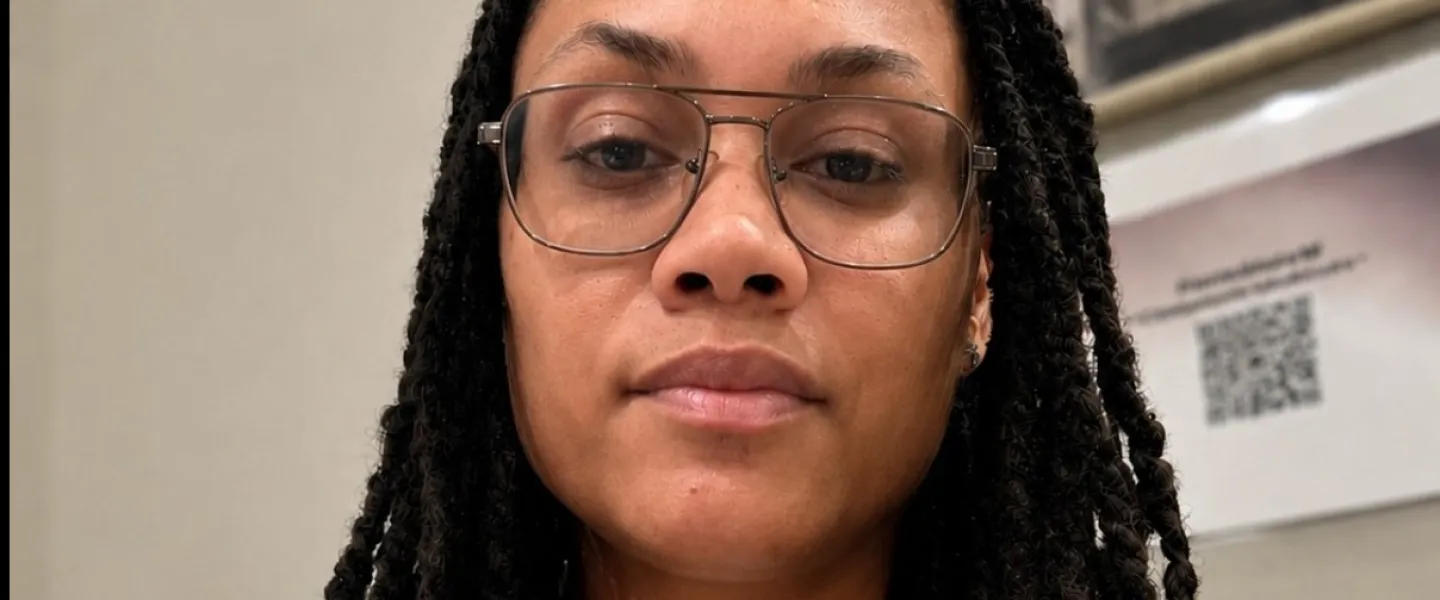
After a traumatic brain injury changed how she approached learning, allied health student Angela Singh found the flexibility, support, and confidence to keep moving toward her healthcare career goals.
University of the Cumberlands online allied health student Angela Singh, of Louisville, Kentucky, was recently selected as a Jeannette Rankin Foundation Scholar, recognizing her commitment to education, personal growth, and community service.
The Jeannette Rankin Foundation supports nontraditional students who demonstrate financial need and are pursuing technical or vocational education, a first associate degree, or a first bachelor's degree at an accredited nonprofit U.S. institution.
For Singh, who is completing her final semester in Cumberlands' online Associate of Science in Allied Health program, the recognition represents more than financial assistance. It is an acknowledgment of the challenges she has overcome and the future she is working to build.
“Receiving the Jeannette Rankin Foundation scholarship meant more to me than financial support,” shared Angela. “It felt like someone outside of my immediate circle looked at my journey, my goals, and everything it has taken to get here and said, ‘We believe this is worth investing in.’”
What Is the Jeannette Rankin National Scholar Grant?
The Jeannette Rankin National Scholar Grant helps women age 35 and older pursue higher education and create better futures for themselves and their communities.
To be eligible for the grant, applicants must self-identify and present as women, be at least 35 years old, demonstrate financial need, and be pursuing technical or vocational education, a first associate degree, or a first bachelor's degree at an accredited nonprofit U.S. institution.
Interested students are asked to complete an eligibility survey before applying. Applicants must also submit a recommendation letter.
Selected scholars may receive up to $3,000 annually, with grants renewable for up to five years.
The foundation considers applicants' educational goals, their plans for achieving those goals, and how they intend to use their education to give back to their communities.
For complete eligibility requirements and application information, visit the Jeannette Rankin Foundation National Scholar Grant website.
How a Traumatic Brain Injury Shaped Angela's Educational Journey
For Angela, the goal is to become a psychiatric-mental health nurse practitioner.
But before that happens, her more immediate goals often look like simply getting through the day.
In 2023, Angela was involved in a motor vehicle accident that left her with a traumatic brain injury (TBI) and other long-term injuries, the effects of which she still navigates today.
“There are days when my brain simply does not cooperate,” she explained.
For Angela, living with TBI means there are times when she knows material but struggles to retrieve it, needs more time to process new information, or finds that a task that was once easy now requires a completely different approach.
When she first started her online allied health program, it was tempting to focus on what she could not do. But every time she felt like giving up, a simple thought kept her going.
“I learned not to make permanent decisions based on what I felt in one difficult moment. Instead, I started breaking things down into smaller pieces.”
Sometimes, that meant simply opening an assignment, reading a page of a chapter, or sending one important email.
Over time, those small steps added up to one major accomplishment: Angela is now in her final semester of her associate degree program.
“One of the hardest parts has been learning not to confuse needing a different approach with being incapable,” she explained. “I am proud of my grades and achievements. But I am proud of the person who earned it, because she had to learn how to trust herself again.”
Going Back to College as an Adult Learner: Why Flexibility and Support Matter
For adults returning to college, earning a degree often means balancing coursework with careers, family responsibilities, and other demands that do not disappear when classes begin.
Angela understood that reality firsthand.
For her, the flexibility, academic quality, and personalized support available through Cumberlands' online programs made continuing her education more manageable.
“Cumberlands gave me room to be an adult with a real life and still take my education seriously. The flexibility of online learning has allowed me to continue school while working, managing medical needs, and handling everything else that does not magically stop because you enrolled in college.”
Like many nontraditional students, Angela knew that going back to school did not mean she could put everything else, including her medical condition, on hold.
“You are going to college while life keeps happening. Being selected as a Rankin Scholar made me feel seen in that reality,” she shared.
How Cumberlands Supports Online Students Through Personal Challenges
At University of the Cumberlands, Angela also found faculty and staff who remained committed to her success through difficult moments, including a hospitalization during her studies.
“I have had people at Cumberlands who helped me navigate difficult moments without making me feel like I did not belong here,” she explained.
When Angela needed accommodations or additional communication, professors worked with her to help her continue making progress. Staff members also helped connect her with the resources and guidance she needed.
One relationship proved especially meaningful.
“My Student Success Coordinator, Kimberly Noe, has been an important part of my experience. Having someone who could help me navigate the university, communicate through difficult periods, and remind me that there were resources available made a real difference.”
For Angela, that kind of personalized support was not simply convenient. It changed how she experienced college while learning to manage the ongoing effects of her injury.
“For someone living with a TBI, having people respond with understanding instead of making you feel like you have to prove that your challenges are real matters more than I can explain. It allowed me to spend less energy defending what I needed and more energy actually learning.”
Going back to school as an adult learner requires real support, no matter who you are. For Angela, knowing she had people willing to work with her made it possible to focus less on the challenges standing in her way and more on the education she was working to complete.
From an Online Allied Health Degree to a Future in Mental Healthcare
The Jeannette Rankin Foundation looks for students who hope to make a meaningful difference in their communities.
For Angela, her goal of becoming a psychiatric-mental health nurse practitioner is closely connected to the community advocacy work she is already doing.
Angela cares deeply about serving underserved communities and advocating for mental health. Over the years, she has been involved with organizations including KYHRC, the Drug Policy Alliance, and VOCAL-KY, participating in efforts related to harm reduction, helping people navigate complex systems, and advancing community advocacy.
“I am someone who cares deeply about people and has a hard time seeing a problem without immediately wondering what I can do about it,” she explained. “My community and advocacy work have shaped my goal of becoming a healthcare provider who understands what happens outside the exam room. I do not want to treat a symptom and ignore the world a patient has to return to when they leave.”
Becoming a psychiatric-mental health nurse practitioner will require additional education and clinical training beyond an associate degree, and Angela understands that the journey ahead is a long one.
But she is not discouraged by the number of steps between where she is now and where she hopes to be.
“I am not looking for the fastest title. I am building toward the kind of provider I want to be, one step at a time,” she explained.
Through her online allied health studies at Cumberlands, Angela has built an academic foundation for continuing her education while developing the confidence to approach future challenges differently.
“Before Cumberlands, that entire path could feel enormous. Now I understand that I do not have to accomplish the whole thing at once. I just have to be ready for the next step,” she explained.
And as she approaches graduation, Angela recognizes that her education has helped her develop skills that extend well beyond the classroom.
“I now know how to advocate for myself, ask questions, use support when I need it, manage demanding coursework, and keep going when something does not come easily the first time,” she explained.
For Angela, earning her associate degree is more than another step toward a healthcare career. It is also a reminder of what she has accomplished while learning to navigate life with a traumatic brain injury.
And perhaps most importantly, it has helped her trust herself again.
Explore the Online Allied Health Program at University of the Cumberlands
For adult learners interested in healthcare careers, finding a degree program that balances academic preparation with flexibility and personalized support can make a meaningful difference.
University of the Cumberlands' online Associate of Science in Allied Health program offers a broad allied health sciences curriculum designed to help students build foundational knowledge for healthcare-related careers and continued education.
For students like Angela, that foundation can be an important first step toward larger professional goals.
Learn more about the online Allied Health program at University of the Cumberlands.
Share