

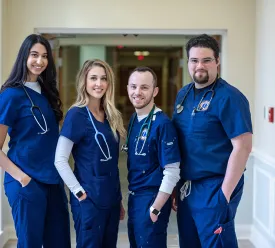
Make an impact in healthcare and build your future as a physician assistant.

If you’re ready to turn your passion for medicine and patient care into a rewarding career, University of the Cumberlands’ Master of Science in Physician Assistant Studies (MSPAS) program can help you take the next step.

Offered at our Williamsburg and Northern Kentucky campuses, our accredited PA programs combines rigorous academic preparation with hands-on clinical training to prepare graduates to provide high-quality, compassionate patient care. With competitive PANCE pass rates comparable with National Average, you can be confident in an education designed to prepare you for success.

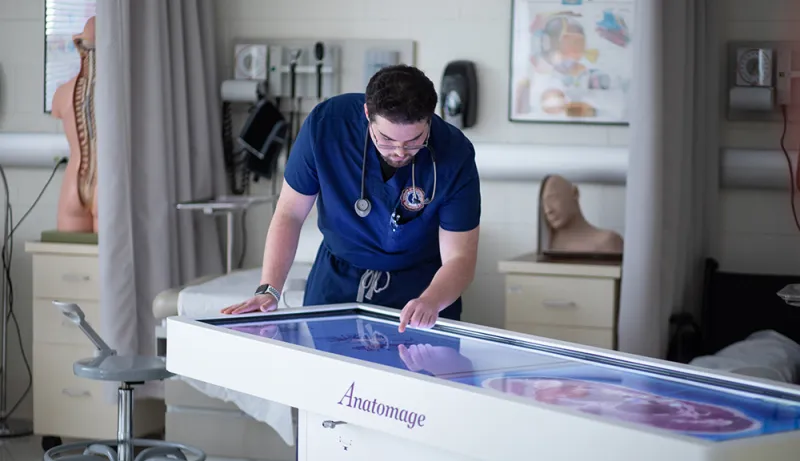
Throughout the 27-month program, you’ll progress through comprehensive didactic and clinical phases, building a strong foundation in clinical medicine, pharmacology, patient assessment, diagnostic reasoning, medical procedures, evidence-based practice, and more. During clinical rotations, you’ll apply that knowledge in real-world healthcare settings while developing the clinical and professional skills essential to PA practice.

In just 27 months, you can be prepared to enter a dynamic and rewarding healthcare profession—equipped to think critically, care compassionately, and make a meaningful difference in the lives of your patients and the communities you serve.
Anchor: Stats

By the Numbers

$133,260

Average Salary

31%

Industry Growth

100%

PANCE Pass Rate (2026)

2

Campus Locations
Anchor: Programs

Curriculum

Our accredited Master of Science in Physician Assistant Studies (MSPAS) is designed to teach you the skills you need to provide medical care to patients and can be completed in as little as 27 months.

Requirements include 113 credit hours, 68 of which are earned through didactic coursework in traditional classroom and laboratory settings. All didactic coursework takes place on campus.

The remaining 45 hours of the master's in physician assistant studies program are earned during the second year in the program. Through supervised clinical rotations in the field, our physician assistant program provides students with real-world experiences in family, internal, and emergency medicine; surgery; psychiatry; pediatrics; and women’s health.

Physician Assistant Career Information

*All information from the U.S. Bureau of Labor and Statistics

What PAs Do:

What PAs Do:

Physician assistants, also known as PAs, examine, diagnose, and treat patients under the supervision of a physician.

Duties of a PA:

Duties of a PA:

  • Obtain and review patients’ medical histories
  • Examine patients
  • Order and interpret diagnostic tests, such as x rays or blood tests
  • Diagnose a patient’s injury or illness
  • Provide treatment, such as setting broken bones, stitching wounds, and immunizing patients
  • Educate and counsel patients and their families on a variety of issues, such as treatment and self-care for asthma
  • Prescribe medication
  • Assess and record a patient’s progress
  • Research the latest treatments to ensure quality of patient care

Specialties:

Specialties:

  • Primary care
  • Family medicine
  • Emergency medicine
  • Psychiatry
  • Surgery
  • and more!

Job Statistics:

Job Statistics:

Physician assistants held about 139,100 jobs in 2021. The largest employers of physician assistants were as follows:

  • Offices of Physicians: 51%
  • Hospitals; state, local, and private: 23%
  • Outpatient Care Centers: 10%
  • Educational Services; state, local, and private: 4%
  • Government: 2% 

Median Pay By Industry:

Median Pay By Industry:

In May 2021, the median annual wages for physician assistants in the top industries in which they worked were as follows:

  • Outpatient Care Centers: $128,430
  • Hospitals; state, local, and private: $127,240
  • Office of Physicians: $121,010
  • Government: $106,910
  • Educational Services; state, local, and private: $101, 040

Expectations:

Expectations:

Most physician assistants work full time. Work schedules vary and may include nights, weekends, or holidays. Physician assistants also may be on call, meaning that they must be ready to respond to a work request with little notice.

Anchor: FAQs

Common Questions

The knowledge and skills I gained during PA school set the foundation for how I practice as a PA today. I am reminded to stay flexible, work hard as a team, and be open to questions.

Annmarie Sagraves, PA-C
BS 2016, MSPAS 2019

Request Information

Learn more about all that Cumberlands has to offer.

Loading...